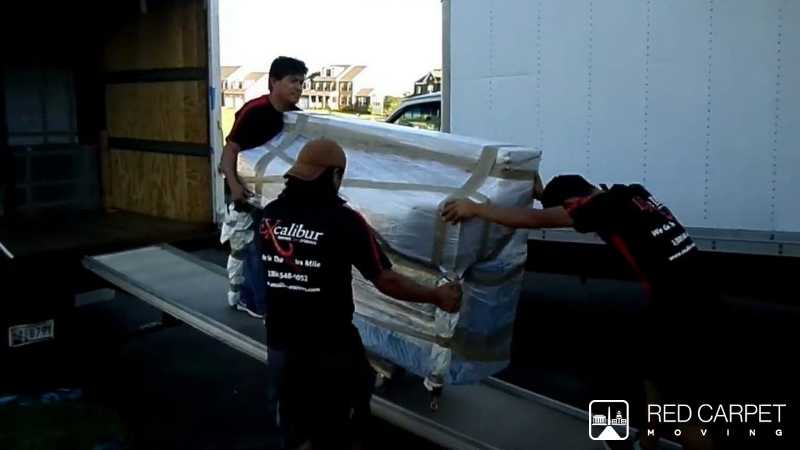
Anyone who has ever tried to nudge a piano even a few inches knows these instruments do not like to be moved. Now place that same piano in the middle of Washington D.C., with its historic homes, tight streets, and unpredictable traffic, and you have a very different kind of challenge.
Why pianos need a different kind of handling
A piano isn’t just heavy. It’s mechanically sensitive, weighted unevenly, and built to sit still, not travel. Uprights carry most of their mass in the lower half, which makes them tip forward if lifted incorrectly. Grands require disassembly because their legs and lyre weren’t designed to bear the stress of moving.
Inside, the instrument is even more fragile. Action parts shift with pressure. Strings react to vibrations. A twist in the wrong direction can affect how the piano sounds long after the move. Before touching the instrument, movers need to understand its structure, its balance, and the safest way to stabilize it. That early attention sets the tone for everything that follows.
How Washington D.C. complicates the job
The city adds its own set of rules to the process. Many rowhouses were built decades before anyone imagined moving a full-size upright through them. Staircases twist. Landings are narrow. Hallways were designed for foot traffic, not oversized instruments. Then there are the practical complications of tight street parking, limited loading windows, and buildings that require advance notice for elevator use.
Even short, local moves can feel like a maze. A street that looks quiet in the afternoon might be packed again by early evening. A loading zone might be free one minute and blocked the next. And because the city blends old architecture with modern living, no two moves follow the same pattern.
Red Carpet Moving handles this by planning around what the city gives us. We check access, walk the route, and confirm building rules before the team even arrives. Understanding the layout prevents delays or forced improvisation later.
The method behind a smooth piano move
Once the planning is done, everything comes down to technique. Piano moving isn’t about brute strength. It’s about guiding the instrument with the right pressure at the right time. Movers lift from specific points that won’t strain the frame. They brace the piano on boards designed to distribute weight evenly. They move at a pace that lets them adjust instantly if the instrument shifts.
Outdoors, the approach becomes even more measured. Washington sidewalks slope. Some blocks don’t have curb cuts. Pavement can tilt in ways that push the instrument off-center if you’re not ready for it. The team moves with the environment instead of fighting it, adjusting grip and pace based on what the surface allows.
Inside the truck, stability becomes the priority. Proper bracing keeps it from swaying on turns. Padding absorbs vibration. Placement distributes weight evenly so the piano doesn’t shift during the drive. Even short trips benefit from this level of care, especially for older or recently tuned instruments.
What a successful piano move looks like
When everything goes right, a piano move feels calm. There’s no dragging, no sudden jolts, no scrambling to make something fit. The instrument leaves one space, arrives in another, and settles into place without drama. After that, the owner schedules a tuning, and the piano adjusts naturally to its new environment.
For Red Carpet Moving, that smoothness is the point. Washington D.C. presents plenty of obstacles, but with preparation and steady technique, those obstacles don’t need to turn into problems. A piano will always demand respect when it moves, and the city will always add complexity. But when both are handled thoughtfully, the result is a relocation that feels careful, controlled, and worry-free.